

Life Stages by Age
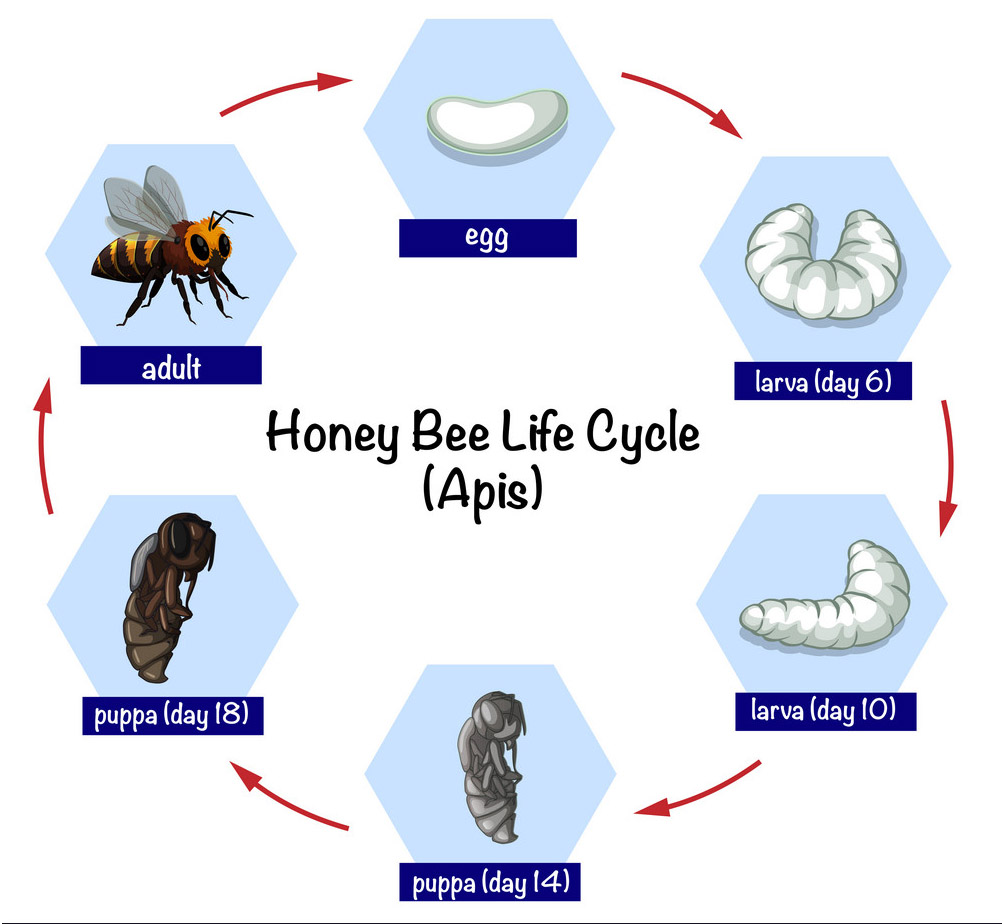
A honey bee’s life starts as an egg, hatches into a larva, transforms into a pupa, and finally emerges as an adult bee. Worker bees live 5–6 weeks in summer, while queens can live years!
Graphic (Print): Lifecycle wheel.
App: Spin to reveal each stage with animations.
Worker Bee Jobs by Age
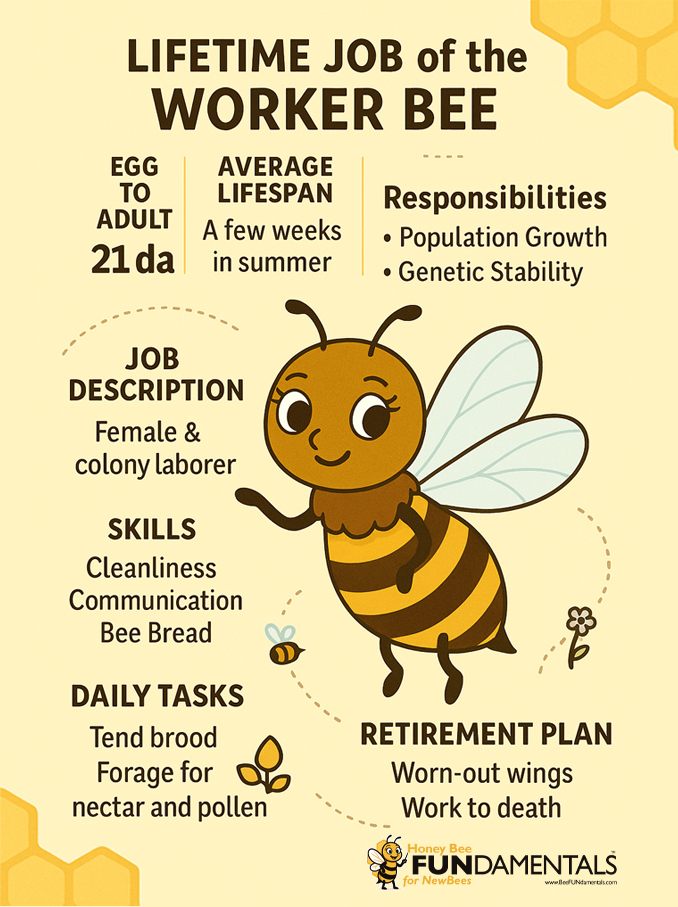
Honey Bees Have Specific Jobs,
in a Specific Order from Emergence to Death:
The Worker Bee Jobs by Age:
INSIDE THE HIVE:
– Housekeeping (Days 1–3)
– Undertaking (3–16)
– Nursing (4–12)
– Attending the Queen / Retinue (7–12)
– Receiving and putting nectar into cells (12–18)
– Fanning and temperature control (12–18)
– Wax production and comb building “architects”) (12–35)
FRONT PORCH / SURROUNDING HIVE:
– Guarding the hive (days 18 – 21)
OUTSIDE OF THE HIVE:
– Field bees / Foraging (21+) (nectar, pollen, propolis, water)
Queen Bee Job
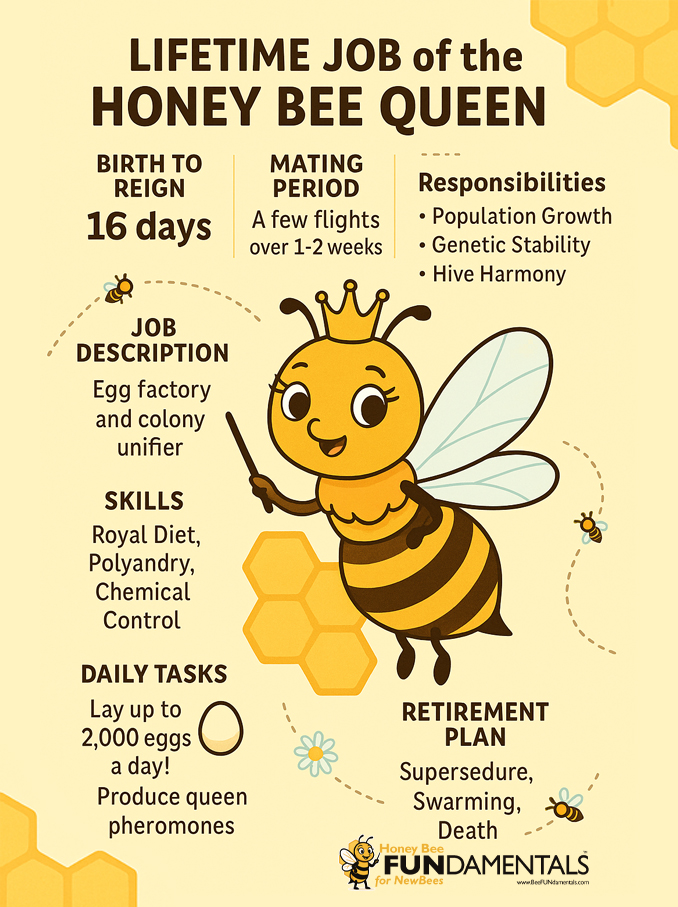
Queen Bee Jobs from Emergence to Death:
The Queen Bee:
🐝 Birth & Early Life
Royal Egg – The queen begins life as a fertilized egg, just like worker bees. The difference? She’s laid in a special vertical queen cell that’s been built by worker bees.
Royal Diet – From larva stage onward, she is fed exclusively on royal jelly, a protein-rich secretion from nurse bees. This special diet triggers her reproductive development.
Transformation – The queen develops faster than workers: 16 days from egg to emergence (workers take ~21 days, drones ~24).
🐝 Claiming the Throne
Emergence – Upon hatching, a virgin queen immediately inspects the hive.
Rival Elimination – If other queens exist, she may “pipe” (make a high-pitched sound) and seek them out, stinging them to death before they emerge, or engaging in deadly duels.
If Multiple Virgins Hatch – Workers might let them fight, or a swarm may leave with one queen.
🐝 Mating Flights (The Queen’s Brief Honeymoon)
Timing – 5–10 days after emerging, she makes several mating flights.
Drone Congregation Areas – She flies to places where hundreds of drones gather.
Polyandry – Mates with 10–20 drones mid-flight. Each drone dies after mating, and the queen stores millions of sperm in her spermatheca — enough for her lifetime.
Return to Hive – Once mating is complete, she never leaves the hive again except in rare swarming events.
NOTE: AFTER SHE RETURNS FROM HER MATING FLIGHT, SHE NEVER LEAVES THE HIVE (unless she leaves with a swarm)
🐝 Egg-Laying CAREER
Full-Time Job – Her sole duty is laying eggs — up to 1,500–2,000 eggs per day during peak spring and summer.
Fertilized vs. Unfertilized Eggs –
Fertilized → Workers (female) or potential queens.
Unfertilized → Drones (male).
Chemical Control – She produces queen pheromones (queen mandibular pheromone) that:
- Keep workers from raising new queens.
- Signal colony health.
- Influence worker behavior and hive unity.
🐝 The Queen’s Responsibilities
Population Growth – Ensures a strong workforce by regulating egg output.
Genetic Stability – Her stored sperm allows continuous fertilization for years.
Hive Harmony – Pheromones maintain social order and suppress worker reproduction.
🐝 Decline & Replacement
Peak Years – Most productive in her first 2–3 years; lifespan can reach 3–5 years.
Signs of Aging – Lays fewer eggs, irregular brood patterns, weaker pheromone signals.
Supersedure – Workers may begin raising a new queen while the old one is still alive.
Swarming – A healthy queen may leave with part of the colony to start a new hive.
Death – If she dies suddenly, workers rush to create an emergency queen from young larvae.
🐝 Queen’s Lifetime Summary
Birth to Reign: 16 days
Mating Period: A few flights over 1–2 weeks
Reign Duration: 2–5 years
Primary Role: Egg factory + colony unifier
Legacy: Leaves behind an entire generation of bees and possibly daughter colonies
Drone Bee Job
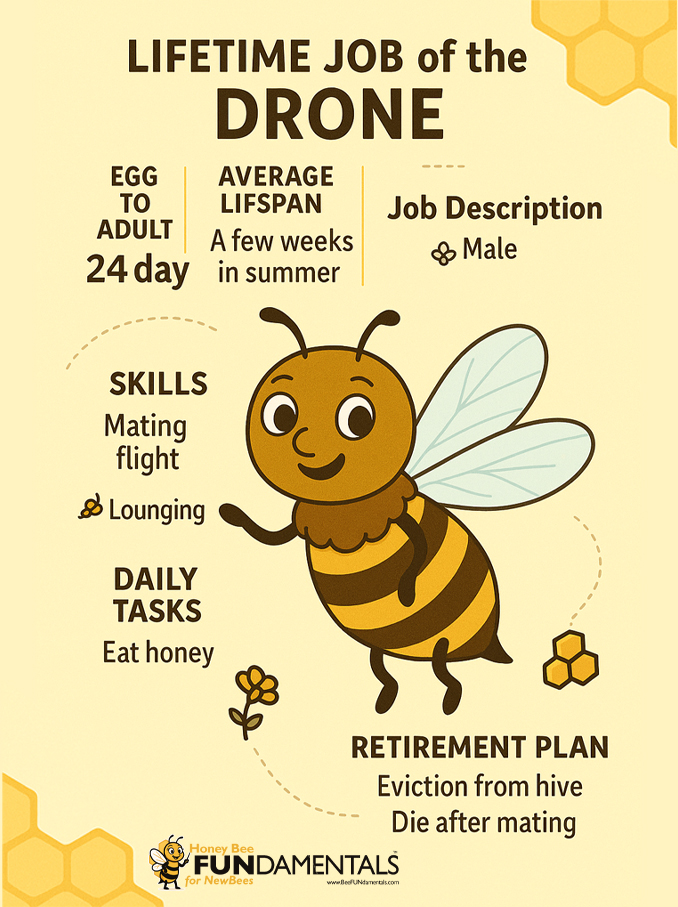
The Drone Bee’s Job from Emergence to Death:
The ONLY Male Bees in the Colony
Primary Mission:
Mate with a virgin queen from another colony to ensure genetic diversity and colony survival.
Life Stages & Timeline
Egg (Day 0–3)
Laid by the queen in a larger, drone-sized cell (unfertilized egg).
White, rice-grain-sized egg attached upright in cell.
Larva (Day 3–10)
Fed copious amounts of drone jelly (similar to royal jelly but less potent).
Larva curls in C-shape, grows rapidly.
Pupa (Day 10–24)
Capped in wax by workers.
Metamorphosis from larva to adult bee occurs inside the capped cell.
Emergence (Day 24)
Chews through wax cap and emerges as an adult drone bee.
Larger, more robust body than workers; big eyes for spotting queens in flight.
Adult Life & Duties
Age 1–4 Days – Orientation & Feeding
Spends time inside hive.
Fed entirely by worker bees (cannot feed themselves).
Orient to hive entrance.
Age 4–12 Days – Flight Practice
Short practice flights to build muscle strength and learn surroundings.
Still dependent on workers for food.
Age 12+ Days – Mating Flights
Leaves hive on warm, sunny afternoons to congregate at drone congregation areas (DCAs).
Uses large eyes to detect virgin queens in flight.
Attempts mating in mid-air.
Mating is fatal — reproductive organs rupture after mating.
Daily Routine
- Lounge inside hive when not flying.
- Eat honey or be fed by workers.
- No foraging, nursing, or wax production duties.
If Successful in Mating: Dies instantly after copulation.
If Unsuccessful: Lives for several weeks in summer but is expelled from the hive before winter (workers will withhold food and push drones out to conserve resources). Death from starvation or cold follows.
FUN FACT: Drones do NOT forage and they do NOT feed themselves!
Drone bees don’t have a special “feed me” dance like foragers, nor a “feed me” pheromone — they rely on close-contact, physical communication in the hive with their SISTER worker bees. Here’s how it works:
Drone-to-Worker Feeding Communication
Begging Posture
- The drone approaches a worker, faces her directly, and extends his proboscis (tongue) toward her mouthparts.
- This is a universal honey bee signal meaning, “I need food.”
Antenna Tapping
- The drone gently taps or strokes the worker’s head and antennae.
- This antennation helps confirm identity and request — kind of like “Hey, sis, I’m family. Help me out.”
Lack of Aggressive Pheromones
- Drones don’t release foraging or alarm pheromones — their calm, non-defensive body language signals they’re not a threat and are dependent.
Trophallaxis
- The worker responds by trophallaxis — mouth-to-mouth transfer of partially digested nectar/honey from her crop (stomach) to the drone’s mouth.
- This not only feeds the drone but also passes along pheromonal and chemical cues about hive status.
Anatomy of the Honey Bee
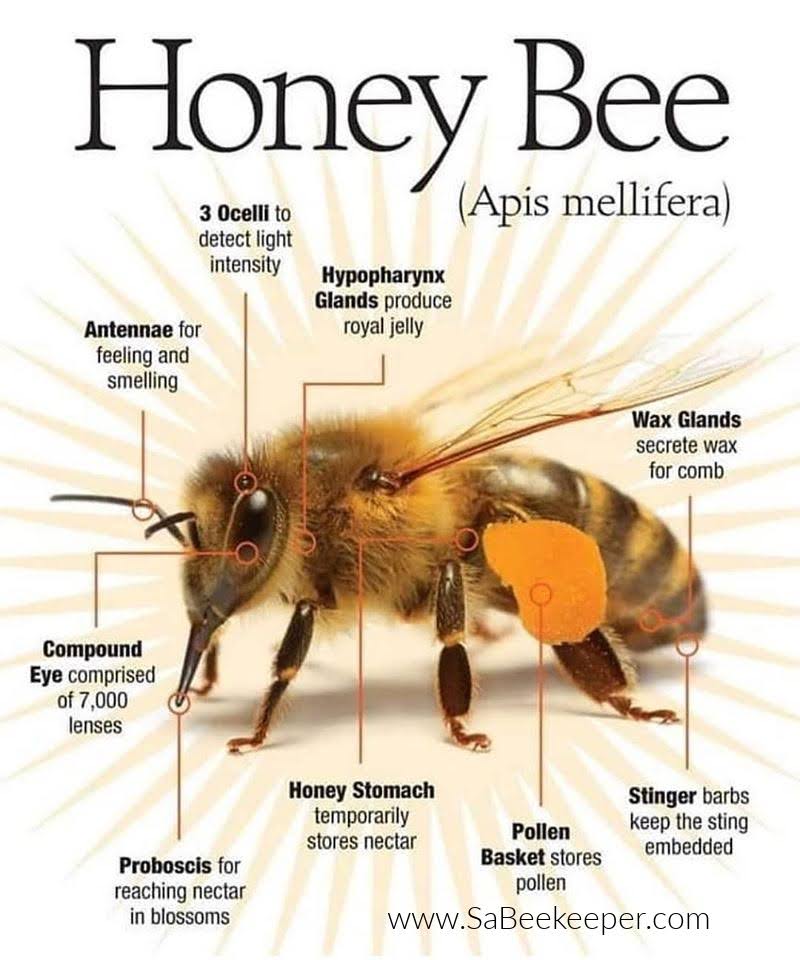
Honey bees have three main body parts:
Head: Eyes, antennae, mouthparts for sipping nectar.
Thorax: Wings and legs for flying and walking.
Abdomen: Stinger, wax glands, and digestive organs.
APP: Tap each part to zoom in and learn more.
Exoskeletal System
Reproduction System

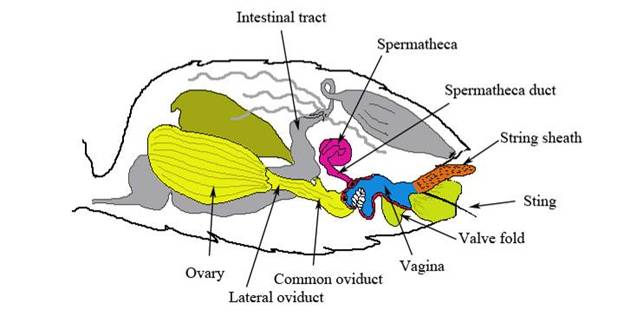
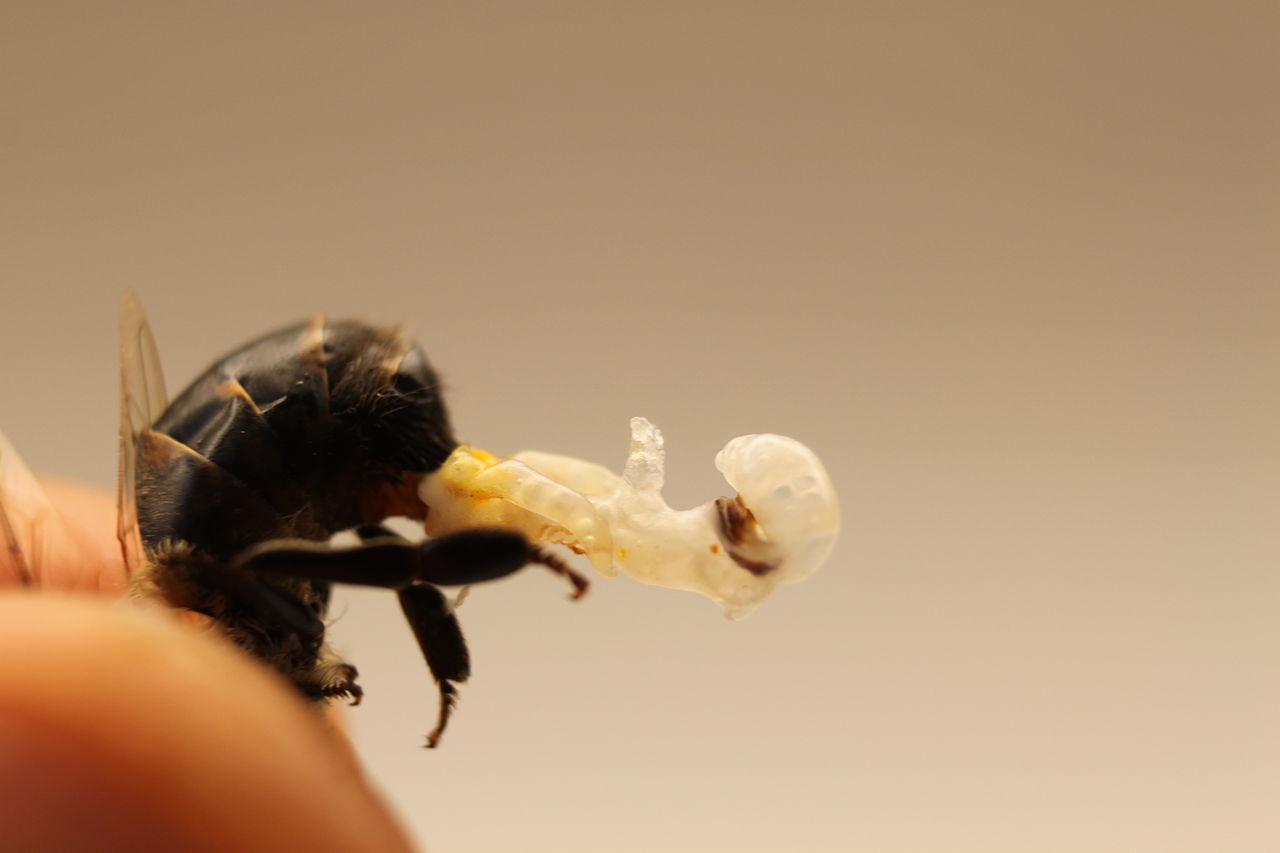
Only the queen lays eggs. Fertilized eggs become female worker bees or new queens; unfertilized eggs become male drones. Drones’ main job is to mate with queens.
APP: “Choose the Egg” interactive path.
Digestion & Nutrition System
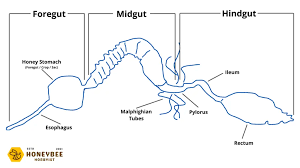
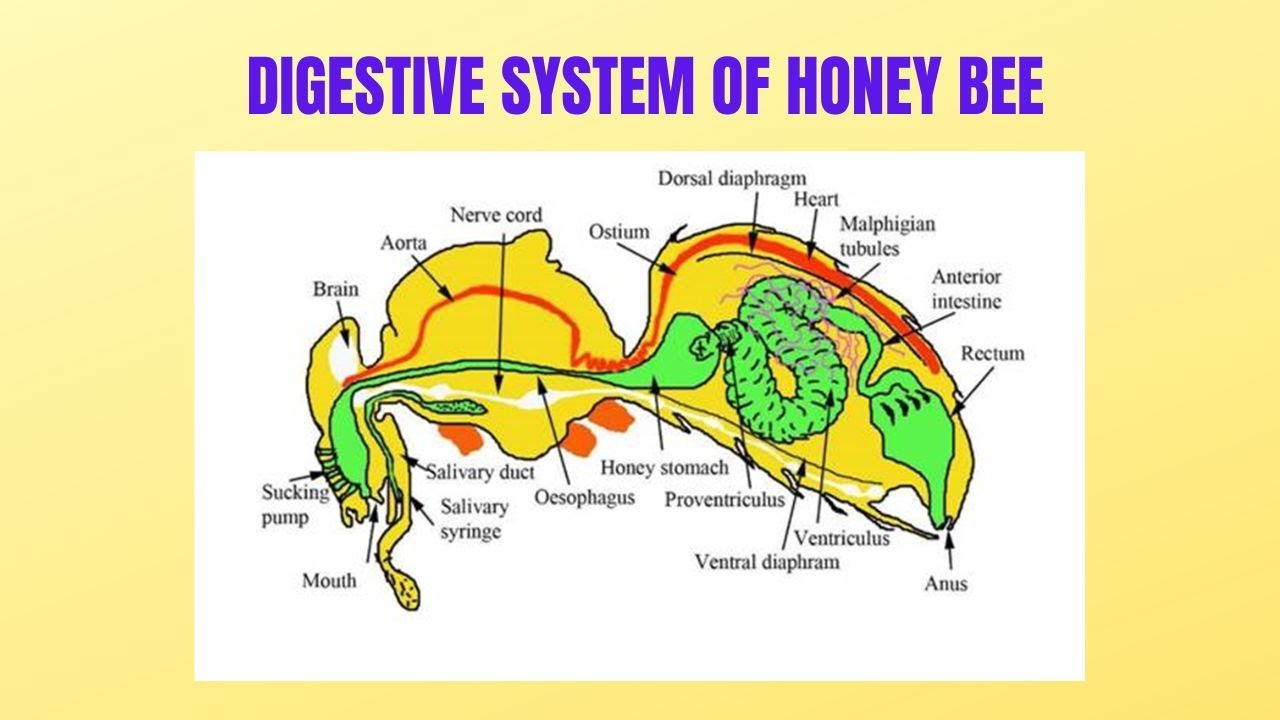
Bees eat nectar, pollen, water, and propolis. Nectar is stored in a special “honey stomach” until it’s passed to another bee to make honey. Pollen provides protein for growing bees.
Graphic: “From Flower to Hive” nectar map.
App: Drag nectar from flower to bee to hive.

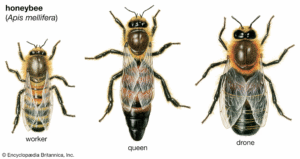
Quick Facts:
- Queens do NOT forage–you’ll likely NEVER see a queen honey bee in your garden (rare exceptions)
- ALL foraging bees that you DO see in gardens, on plants, flying around your BBQ–are FEMALE.
- The ONLY worker bees in the hive are all female, and who forage outside the hive.
- Drones don’t have dads, but they do have grandpas.
- Drones ONLY job is to impregnate ONE virgin queen.
- Worker bees “can” lay eggs, but if they do (in the absence of a queen), they can ONLY lay drone / male bees!
- Drones do NOT chew themselvs out of their wax-capped brood cell–their worker bee sisters chew them out.
- Drones don’t feed themselves–their worker bee sisters feed them. Drones tell their sisters to bring them food, through their hormones