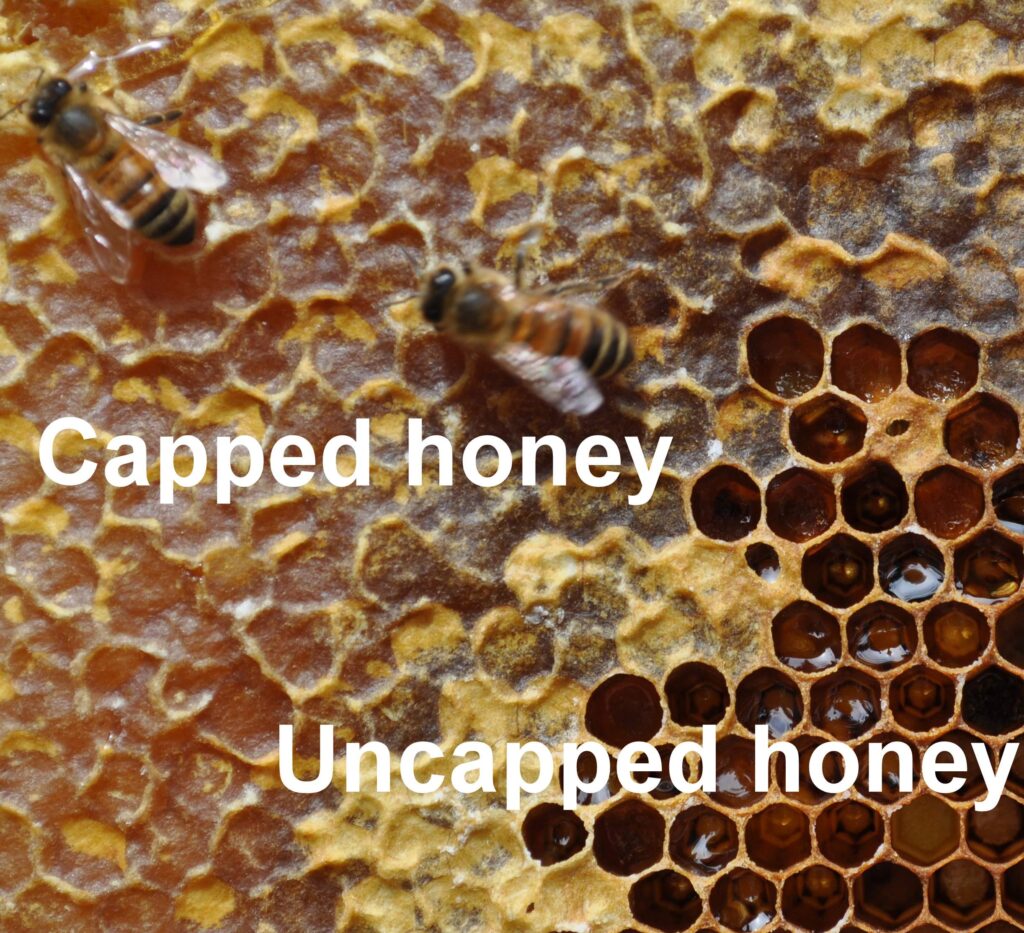
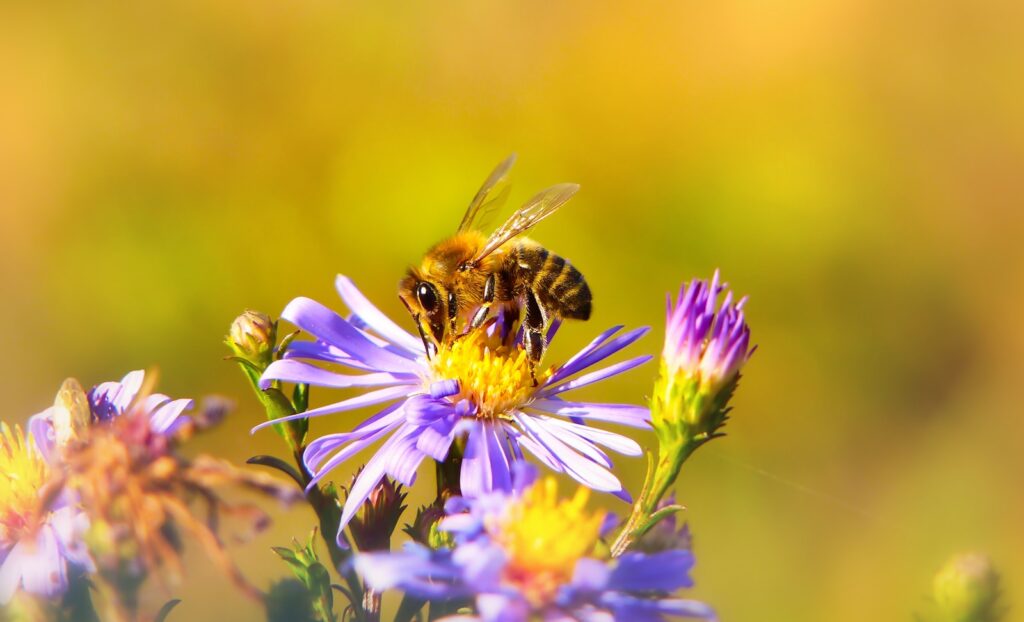
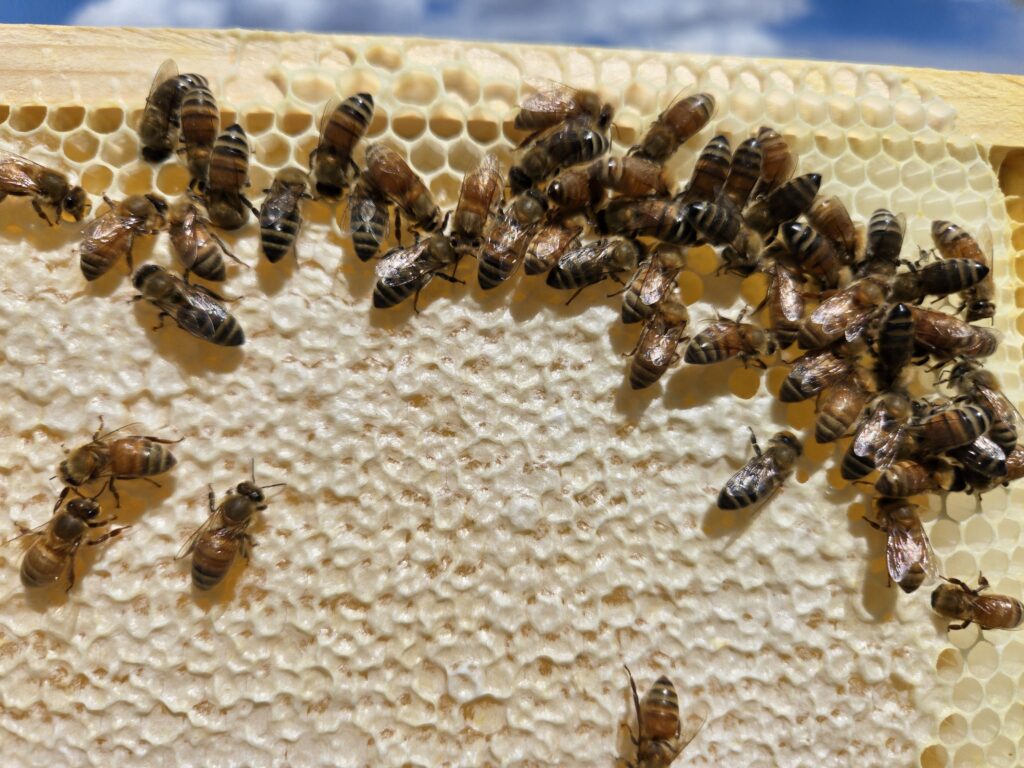
Nectar: The primary source of carbohydrates for the colony, used to produce honey for energy and food reserves, especially during winter. Honey also provides essential vitamins and minerals.
Pollen: The main source of protein, fats, and other nutrients, vital for the growth and development of young bees (larvae) and the queen. Pollen is converted into “bee bread” and stored in the hive.
Water: Used for various purposes including regulating hive temperature through evaporative cooling, diluting honey for larvae, and hydrating the bees themselves. Bees prefer mineral-rich water sources like puddles or ponds.
Plant Resins: These sticky substances, collected from tree buds and other vegetation, are used to create propolis (often called “bee glue”). Propolis is utilized for:
Sealing cracks and openings in the hive.
Smoothing rough surfaces within the hive.
Fortifying the hive structure.
Providing antibacterial and antifungal properties to protect the colony from pathogens.
Honeydew: In certain conditions, especially when other nectar sources are scarce, bees may collect honeydew, a sugary substance secreted by sap-sucking insects like aphids. Honeydew is then processed into honeydew honey.